



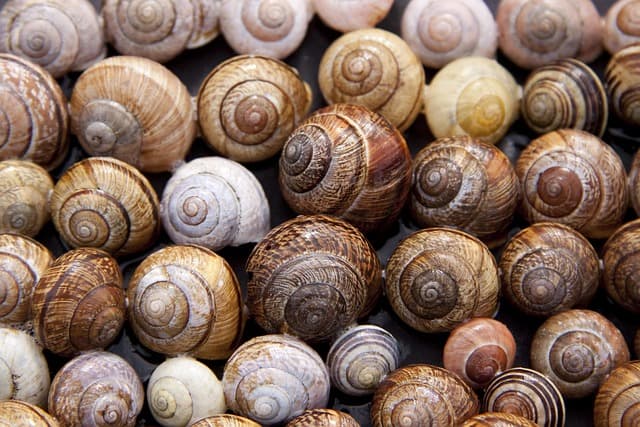
Snail farming (heliciculture) is a promising and environmentally friendly business that requires minimal feeding costs. Snails are herbivorous molluscs that can feed on a variety of plant foods available in your area. However, to ensure their healthy growth and development, it is important to consider their nutrient needs, especially calcium, which is essential for forming a strong shell.
Basic snail foods
Fresh fruits and vegetables
Snails prefer succulent plants with a high moisture content. These include:
- Papaya leaves;
- Taro leaves (kokoyam);
- Carrots;
- Zucchini;
- Pumpkin;
- Apples;
- Pears.
These foods provide snails with essential vitamins and minerals.
Leaves and grass
Young snails (caterpillars) are particularly keen to eat soft leaves such as:
- Papaya leaves;
- Taro leaves (kokoyam).
These plants are readily available and have a high moisture content, which promotes rapid growth of the young.
Calcium supplements
Snails need calcium to form strong shells. It can be provided by:
- Crushed egg shells;
- Chalk;
- Bone meal.
These supplements can be mixed with the main feed or fed separately.
Commercial feeds
There are specially formulated snail feeds that contain all the necessary nutrients. They can be useful for accelerating growth and increasing productivity.
Feeding regimen
Snails are nocturnal animals, so feed them in the evening, between 18:30 and 19:30. This is the most active time for their feeding. It is important to provide fresh food daily to prevent spoilage and contamination.
What should not be given to snails
Some foods can be harmful to snails:
- Rotten or moldy foods;
- Sour or spicy plants;
- Salt;
- Leftover food with seasonings.
These foods can cause illness or even death to snails.
Recommendations for successful feeding
- Provide variety in the snails’ diet.
- Feed calcium supplements regularly.
- Keep the food fresh and remove any leftover food.
- Maintain optimal humidity and room temperature.
- Avoid the use of chemical fertilizers and pesticides in feed plants.
Feeding your snails properly is key to their health and high productivity. By following these recommendations, you can ensure successful snail farming and get a quality product.