
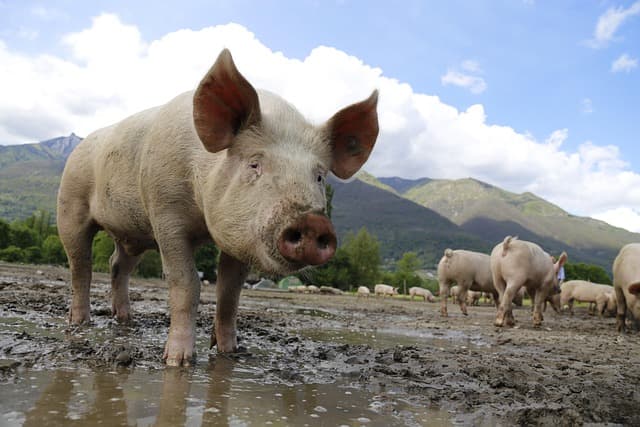
Pig farming in Africa is becoming increasingly popular due to the high demand for meat and the possibility of organizing a profitable business. However, successful pig breeding depends largely on choosing the right breed adapted to the climate, housing conditions and farm objectives. In this article, we will look at the most popular and suitable pig breeds for farmers in Africa based on real data.
Criteria for choosing a pig breed for Africa
There are several important factors to consider before selecting a breed:
- Climate adaptation – hot and humid climates require breeds that are resistant to disease and temperature stress.
- Growth rate and productivity – rate of weight gain and meat volume.
- Meat quality – flavor, fat content, texture.
- Disease resistance – especially important in regions with limited access to veterinary services.
- Profitability and ease of maintenance.
Popular pig breeds in Africa
Nile Swine
- Description: A native African breed adapted to the hot climate and farming conditions in Africa.
- Advantages: High resistance to parasites and diseases, unpretentious in nutrition.
- Disadvantages: Low productivity compared to imported breeds.
- Usage: Often used in small farms and family farms.
Large White
- Description: One of the most popular breeds worldwide, characterized by high meat production.
- Advantages: Fast growth, excellent meat quality, high meat yield per carcass.
- Disadvantages: Requires more intensive care and control of housing conditions, less resistant to heat and disease.
- Usage: Often imported to farms that can provide good care and veterinary control.
Landrace
- Description: A Danish breed known for its egg production (in pigs this is the number of litters) and quality meat.
- Advantages: High fertility, good maternal qualities, fast weight gain.
- Disadvantages: Sensitive to high temperatures, requires good care.
- Use: Suitable for larger farms with climate control.
Duroc
- Description: Breed with excellent ability to gain muscle mass and meat quality.
- Advantages: High stamina, heat tolerance, good meat flavor.
- Disadvantages: May consume more feed than other breeds.
- Uses: Often used for crossbreeding with other breeds to improve performance.
Local African Indigenous Breeds
- Description: Local breeds widely distributed throughout Africa.
- Advantages: Maximally adapted to climatic conditions, resistant to disease and stress.
- Disadvantages: Low productivity and growth rate.
- Usage: Beneficial for small farms with minimal investment.
Features of keeping pigs in Africa
- Feeding: It is important to use local feeds that are readily available and economical. This can be corn, sorghum, vegetable waste.
- Protection from heat: Shade, access to water and cooling are needed to avoid heat stress.
- Disease prevention: Regular veterinary checkups and vaccinations.
- Hygiene: Clean facilities and control of waste products.
Conclusion
The choice of pig breed in Africa depends on the farm’s objectives, level of investment and care options. Local breeds are suitable for beginning farmers and small farms, while imported breeds (Large White, Landrace, Duroc) offer higher productivity with proper care. The optimal solution is often to crossbreed local and imported breeds to combine sustainability and productivity.